
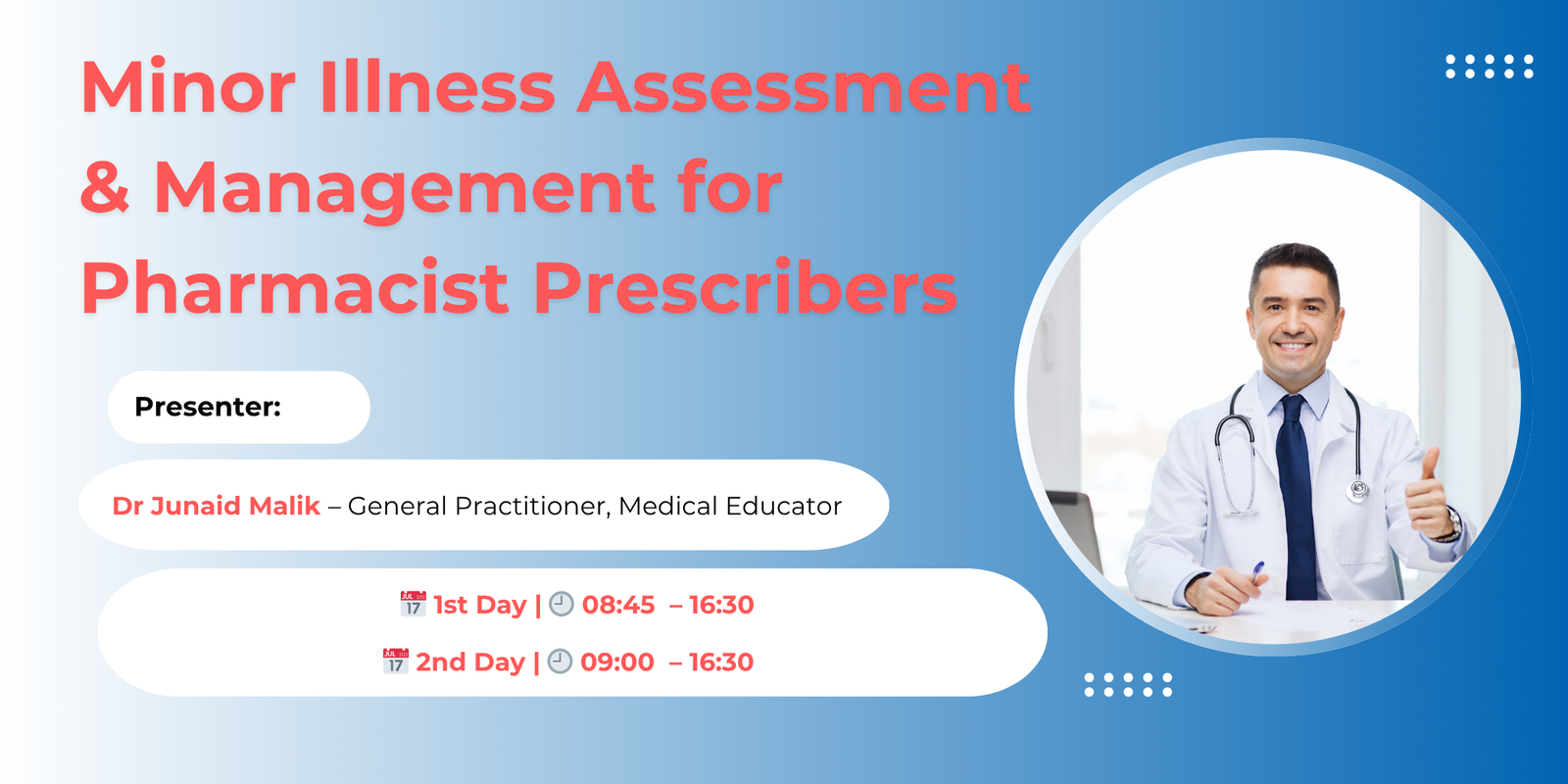
Two-Day Minor Illness Course Agenda
Course Overview
This two-day course is designed to equip pharmacist prescribers and healthcare professionals with the knowledge, clinical reasoning, and consultation skills required to safely assess and manage common minor illnesses in primary care settings.
Day 1 – Foundations of Minor Illness Assessment
08:45 – 09:00 | Registration and Refreshments
- Arrival and sign-in
- Distribution of course materials
09:00 – 09:20 | Welcome and Course Introduction
- Learning objectives
- Course structure and expectations
- Overview of minor illness management in primary care
09:20 – 10:15 | Clinical Assessment Skills Refresher
- Patient-centred consultation skills
- History taking techniques
- Red flag identification
- Safety netting and escalation
- Documentation standards
10:15 – 10:30 | Break
10:30 – 11:30 | Respiratory Tract Infections
- Acute sore throat
- Sinusitis
- Otitis media
- Acute cough and bronchitis
- Use of clinical scoring tools
- Antimicrobial stewardship considerations
11:30 – 12:15 | Fever, Viral Illnesses and Self-Limiting Conditions
- Recognising viral presentations
- Managing patient expectations
- Symptomatic management
- When to refer
12:15 – 13:00 | Lunch
13:00 – 14:00 | Dermatological Conditions
- Eczema and dermatitis
- Psoriasis
- Common skin conditions in primary care
14:00 – 14:45 | Gastrointestinal Minor Illnesses
- Diarrhoea and vomiting
- Constipation
- Dyspepsia and reflux
- Dehydration assessment
- Red flags and referral criteria
14:45 – 15:00 | Break
15:00 – 16:00 | Consultation Workshops – Case-Based Learning
- Interactive patient cases
- Differential diagnosis discussions
- Clinical decision making
- Safety netting practice
16:00 – 16:30 | Reflection and Q&A
- Key learning points
- Group discussion
- Preparation for Day 2
Day 2 – Managing Common Presentations in Primary Care
09:00 – 09:15 | Recap of Day 1
- Review of key concepts
- Questions and clarifications
09:15 – 10:15 | Urinary Tract Infections and Women’s Health
- Lower urinary tract infections
- Use of assessment criteria
- Vaginal thrush and bacterial vaginosis overview
- Pregnancy considerations
- Referral thresholds
10:15 – 10:30 | Break
10:30 – 11:30 | Eye and Ear Presentations
- Conjunctivitis
- Dry eye
- Ear wax and otitis externa
- Recognising urgent ophthalmic and ENT referrals
11:30 – 1.00 | Musculoskeletal and Pain Presentations
- Back , neck and shoulder pain
- Identifying red flags
1.15– 2.00pm | Lunch
2.00– 3.30 | Minor Illnesses in Children
- Fever in children
- Childhood rashes overview
- Respiratory symptoms in paediatrics
- Safeguarding considerations
- Parent/carer communication
3:45 – 4:00pm | Break
16:00 – 16:30 | Course Assessment and Closing Session
- Knowledge assessment
- Course evaluation
- Certificates and next steps
Suggested Learning Outcomes
By the end of the course, participants should be able to:
- Conduct structured assessments for common minor illnesses.
- Identify red flag symptoms requiring urgent referral.
- Apply evidence-based management strategies.
- Demonstrate safe prescribing and antimicrobial stewardship.
- Deliver effective patient-centred consultations.
- Document consultations appropriately and provide safety netting advice.
Recommended Audience
- Pharmacist Independent Prescribers
- Newly Qualified Prescribers
- Primary Care Pharmacists
- Advanced Clinical Practitioners
- Other healthcare professionals involved in urgent or primary care
Optional Additional
- Follow-up mentorship sessions